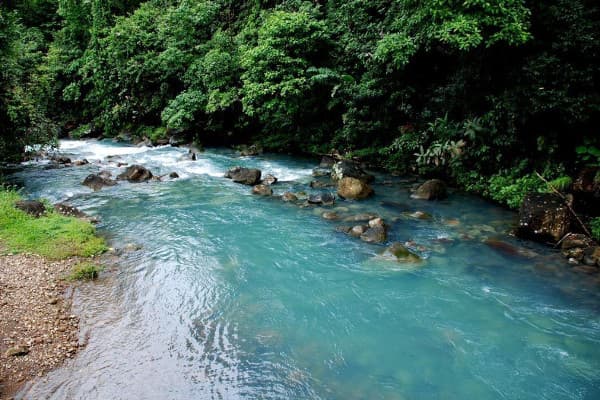

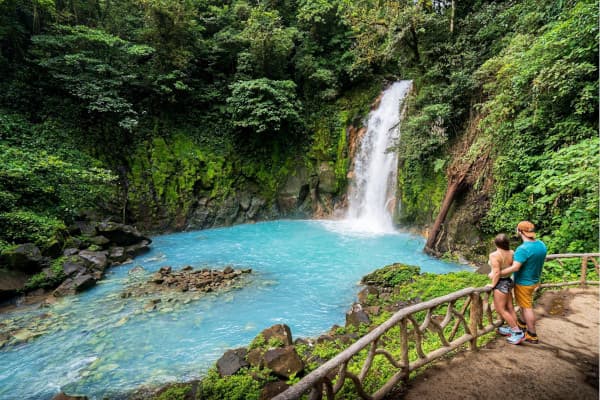
Tenorio Volcano National Park protects 12,871 hectares of rainforest on the slopes of a dormant volcano in northern Costa Rica. Most people know it for one thing: Río Celeste, the river that runs bright turquoise through the forest.
We are Jungle Life, a family-run tour operator in Bijagua, 15 minutes from the park entrance. This guide covers what a first-time visitor needs: where the park is, what it costs in 2026, what you will see on the trail and how to plan the rest of your day.
Tenorio Volcano National Park at a glance
- Location: northern Costa Rica, on the Guanacaste Volcanic Range. The entrance is 9 km (5.6 miles) from the village of Bijagua.
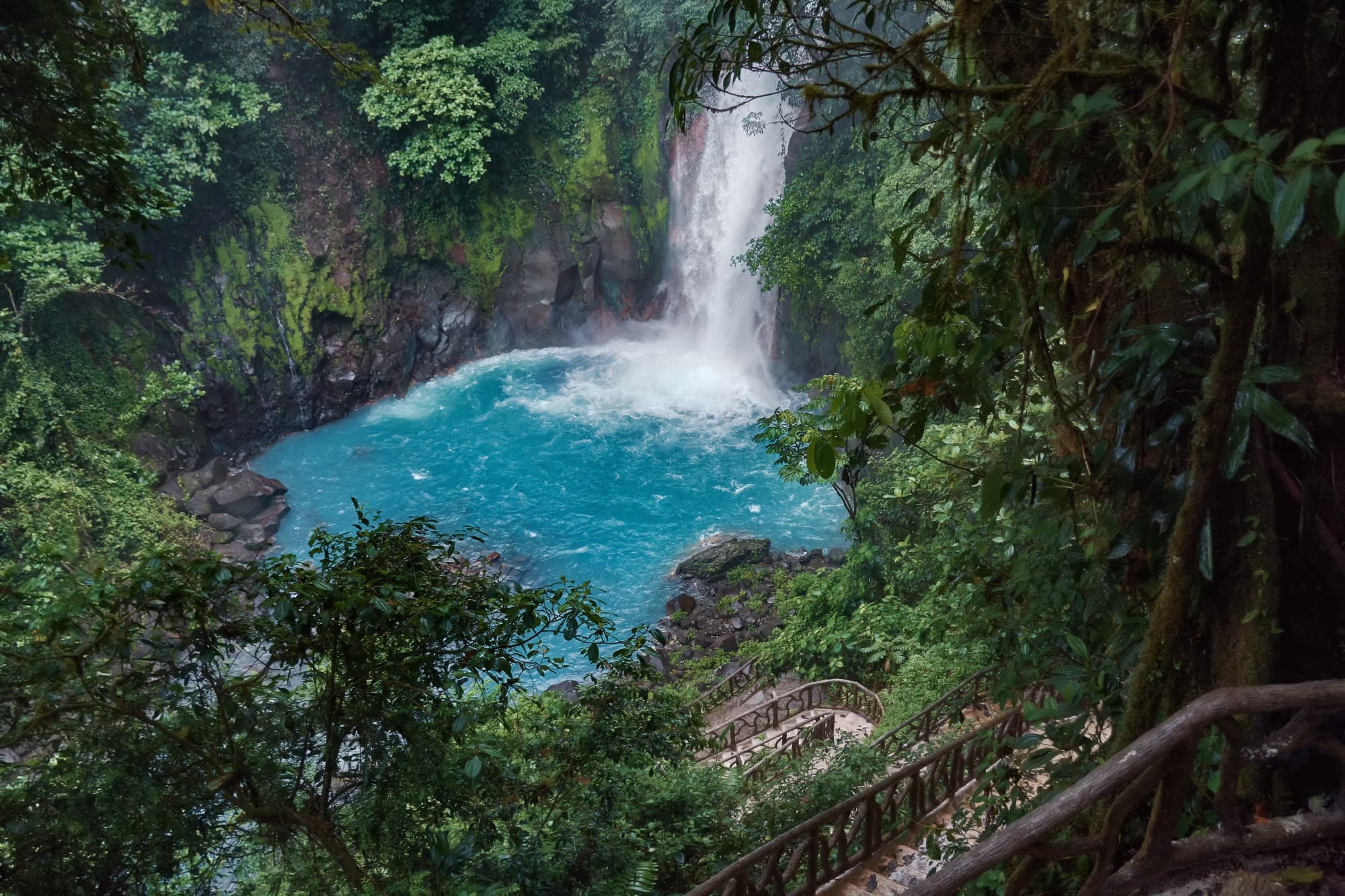
- Known for: Río Celeste, its turquoise river, and a 20-meter (66 ft) waterfall.
- Hours: open every day. Entry from 8:00 AM to 2:00 PM; everyone must be out by 4:00 PM.
- Entrance fee in 2026: $13.56 for non-resident adults and $5.65 for non-resident children, tax included.
- Tickets: online only, on the official SINAC site. There is no ticket window at the gate.
- Trail: Misterios del Tenorio, 6 km (3.7 miles) round trip, about 3 hours.
- Swimming: not allowed anywhere inside the park.
- Size: 12,871 hectares (about 31,800 acres), a national park since 1995.
Where is Tenorio Volcano National Park?
The park sits on the Guanacaste Volcanic Range, on the line between Alajuela and Guanacaste provinces. Together with the protected zone around it, it spreads over four cantons (Upala, Guatuso, Cañas and Tilarán), and since 2007 it has been part of UNESCO's Agua y Paz Biosphere Reserve.
The visitor entrance is 9 km from Bijagua and 28 km from Guatuso. By car it takes about 1.5 hours from La Fortuna, about 1.5 hours from Liberia airport and around 4 hours from San José. The road is paved the whole way, so you don't need a 4x4.
For the route from each starting point and a map, see our guide on how to get to Río Celeste.
Hours, entrance fees and tickets in 2026
The park is open every day of the year. You can enter from 8:00 AM to 2:00 PM and stay until 4:00 PM. These are the 2026 fees, tax included:
- Non-resident adults: $13.56
- Non-resident children: $5.65
- Costa Rican and resident adults: ₡904
- Costa Rican and resident children: ₡565
- Resident seniors and children under 2: free
The ticket covers entry only: no guide and no transport. Tickets are sold only on the official SINAC site; there is no ticket window at the entrance. The park admits 1,200 visitors a day, with no more than 500 on the trail at the same time, so in high season the entry slots sell out 2 to 6 days ahead.
Parking is private and paid separately, from about $6 for the whole visit. There is drinking water and restrooms at the entrance.
The booking system has its quirks: you need an account just to see which slots are free. Our Río Celeste tickets and hours guide walks you through it step by step.
The Misterios del Tenorio trail, stop by stop
The park has one trail open to visitors. It is 3 km long and you come back the same way: 6 km (3.7 miles) in total, about 3 hours with photo stops. This is what you reach, in order:
- Río Celeste Waterfall. A 20-meter drop into a turquoise pool, and the photo everyone comes for. You reach it down a long staircase, and you climb the same stairs back up.
- The lookout (Mirador). On a clear day you can see three of the four cones of the Tenorio massif.
- The Blue Lagoon (Laguna Azul). A small, still pool where the color is at its most intense.
- Los Borbollones. Cracks in the riverbed where hot volcanic gases escape and make the water bubble. You can smell the sulfur.
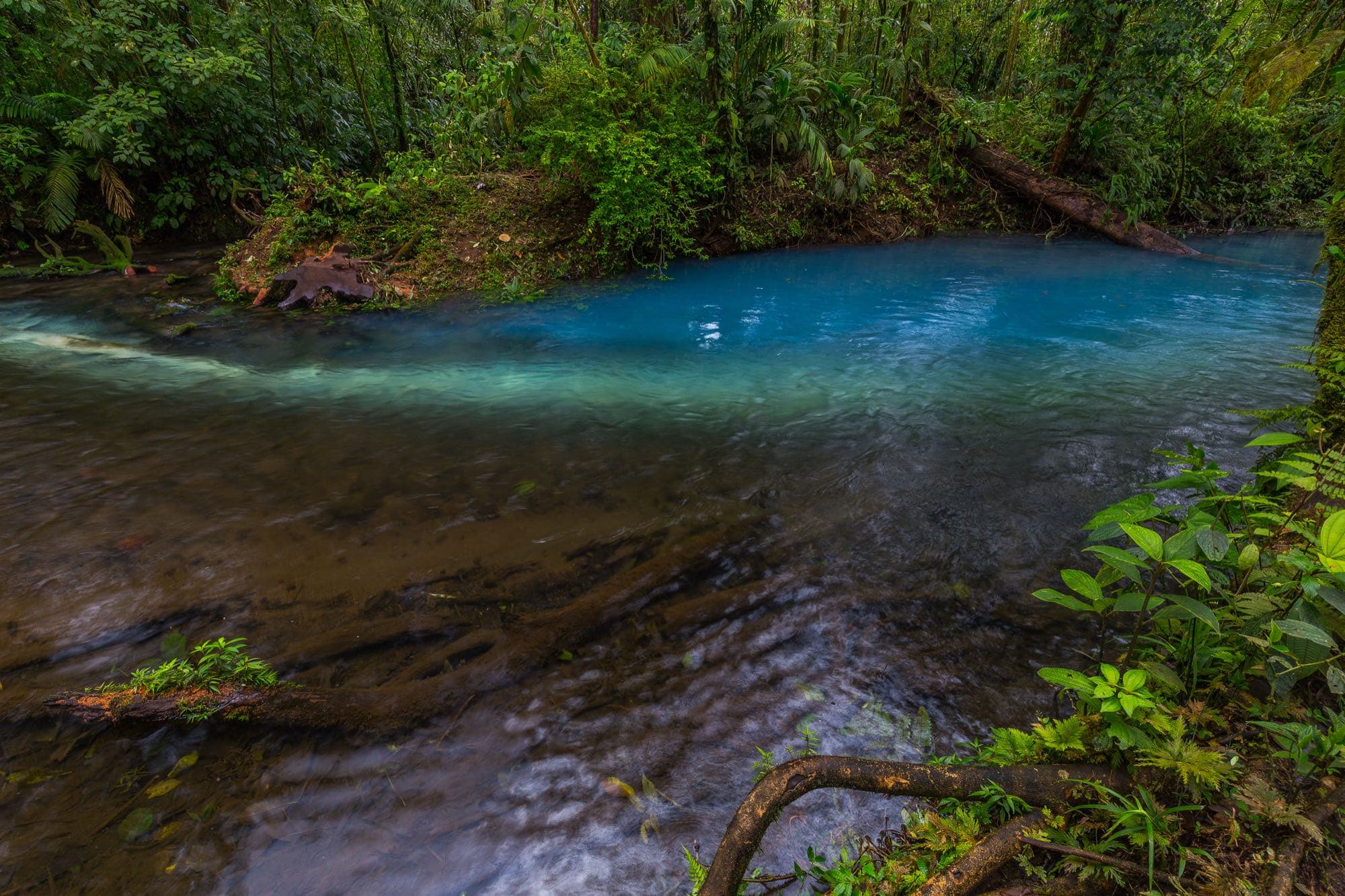
- El Teñidero. The end of the trail and the reason for everything: the one place where you can watch two clear streams meet and the water turn blue.
It is not a technical hike, but it is not a stroll either. The staircase is the demanding part and the path is often muddy, so wear closed shoes with grip. The trail is not wheelchair accessible, and after very heavy rain the rangers may close the staircase down to the waterfall.
Enter by 11:00 AM at the latest. The gate admits people until 2:00 PM, but everyone must be out by 4:00 PM, and visitors who start late are turned around before they reach El Teñidero.
Why is Río Celeste blue?
The color is not a dye and not a stain on the rocks. It is an optical effect. Two clear streams, the Buena Vista River and Quebrada Agria (Sour Creek), meet at El Teñidero. One carries tiny mineral particles; the other is acidic because of the volcano. When they mix, the particles clump together and grow to just the right size to scatter sunlight, and the water looks turquoise.
A team of Costa Rican scientists published that explanation in 2013. The local legend is older: when God finished painting the sky, he washed his brushes in this river.
The blue is not guaranteed. Heavy rain stirs up sediment and the river runs grey-brown, and it takes roughly 24 hours without rain for the color to come back. If it poured overnight and it is still drizzling, consider moving your visit by a day.
Park rules
The rangers enforce these:
- No swimming and no entering the river
- No single-use plastics
- No pets
- No drones
- No alcohol
- No smoking
- Stay on the marked trail
The swimming rule surprises people who have seen photos of others in the blue water. Those photos were taken at hot springs outside the park, or before the rule existed.
Wildlife in Tenorio Volcano National Park
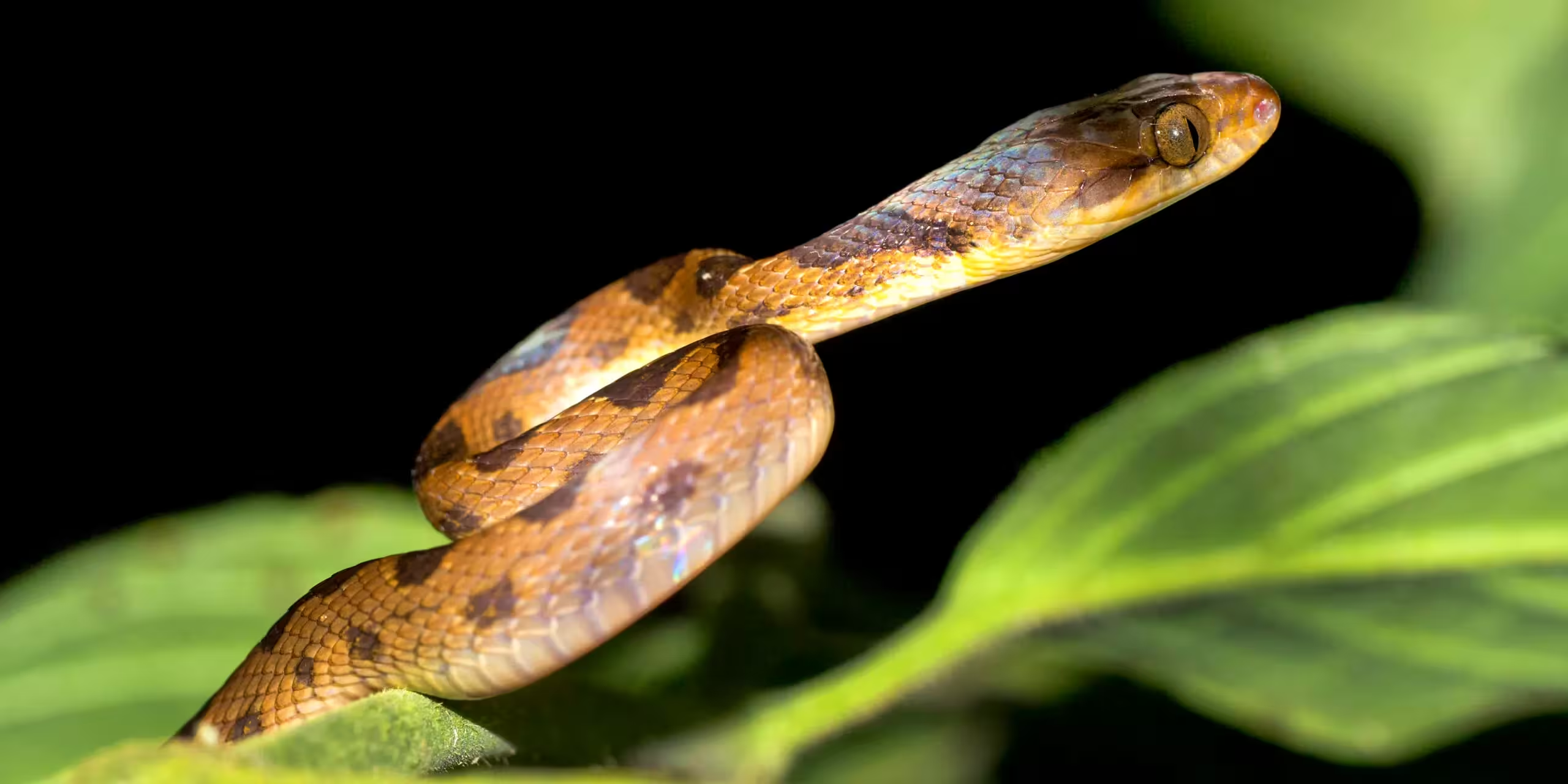
The park protects five different life zones, most of it premontane rainforest, and the list of animals recorded here is long: Baird's tapir, puma, ocelot, margay, jaguarundi, tayra, collared peccary, agouti, paca and white-faced capuchin monkey. Among the birds, the stars are the bare-necked umbrellabird, the crested guan and the sunbittern. The forest is thick with palms, heliconias, ferns, bromeliads and orchids, and it is home to the jícaro danto, a tree that grows only on this volcanic range.
A fair warning: on a trail shared with hundreds of people a day, the big mammals stay out of sight. What you are most likely to notice are birds, insects and, with luck, monkeys in the canopy.
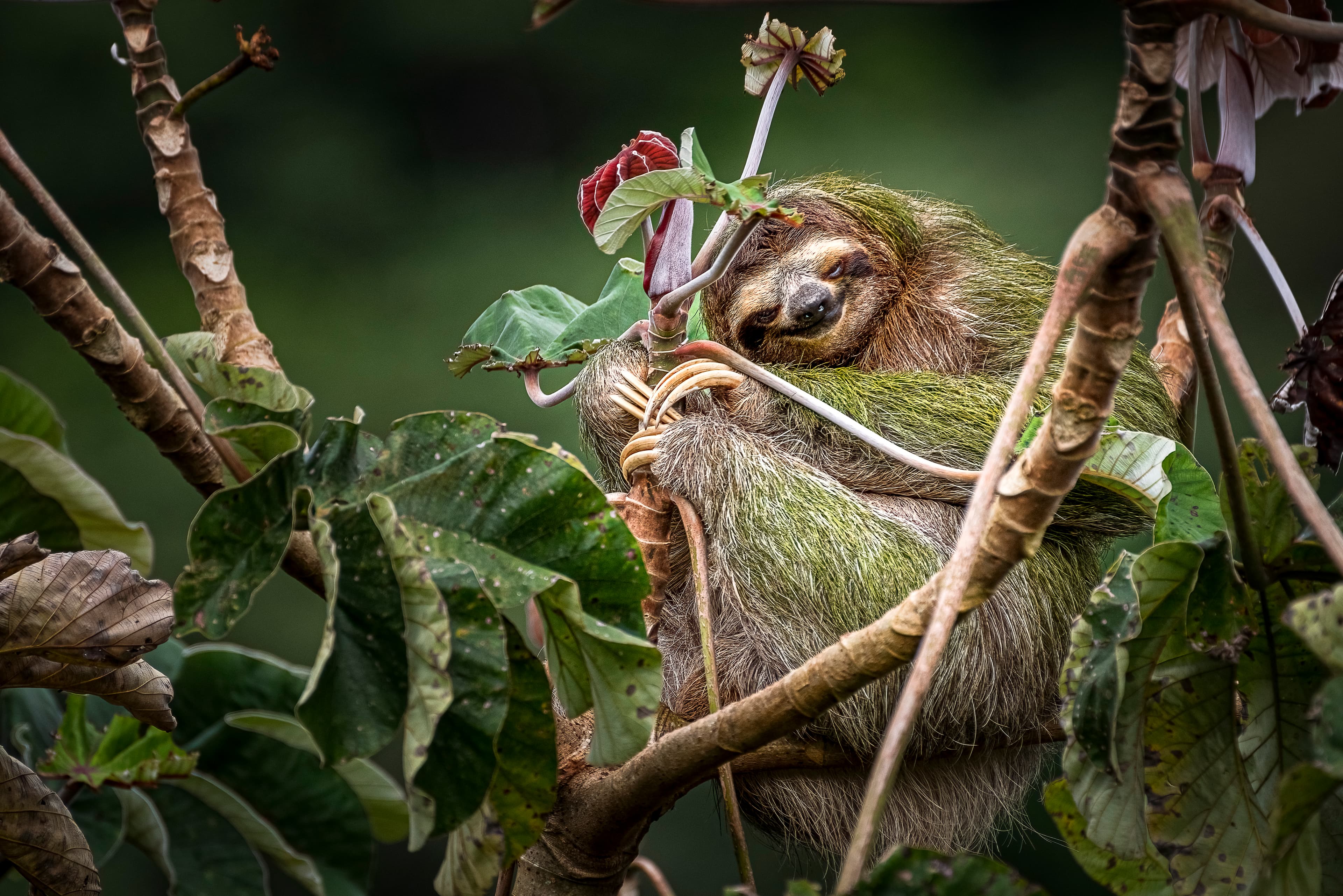
That is the gap our tours fill. We don't run tours inside the national park. We guide small groups on our own private reserve at the foot of the volcano, 15 minutes from the park entrance, where our local guides know where to look for sloths, toucans and poison dart frogs. You can choose the Sloth Tour, the Bird Watching Tour, the Frog Tour or the Jungle Night Tour.
Weather and the best time to visit
Most of the park gets its weather from the Caribbean side, so rain is possible in every month. The average temperature is 23°C (73°F) and about 3,500 mm (138 inches) of rain falls in a year.
The dry season, from December to April, has the most reliable weather and the most visitors, and July is busy too. In any month the morning is the safer bet: afternoon rain is common here, and an early start leaves you enough margin to finish the trail.
If you can choose your day, use the 24-hour rule: a dry morning after a dry day matters more than the month on the calendar.
What to bring
- Closed shoes with good grip
- A light rain jacket, in any season
- Water in a reusable bottle, because single-use plastics are not allowed
- Insect repellent
- The passport or ID you used to book, since tickets are personal
- A little money for parking, which is not included in the ticket
- Dry socks and shoes to leave in the car for after the hike
The volcano behind the park
Tenorio is not a single cone. It is a volcanic massif with four cones, and its highest point reaches 1,916 meters (6,286 ft).
The volcano is considered inactive: no eruption has been confirmed in recorded history. What you can still notice is the heat underneath. At Los Borbollones, volcanic gases bubble up through the river and the air smells of sulfur.
The visitor trail does not climb the volcano: it follows the river on the lower slopes and does not reach the summit.
Protection here began in 1955, when a law declared a national park in the two kilometers around the crater. A forest reserve followed in 1976 and a protected zone in 1991. On June 8, 1995, Tenorio Volcano National Park was created with its current 12,871 hectares. Counting the protected zone around it, 18,402 hectares are protected today.
Want to see it for yourself?
Join our Sloth Tour in Costa Rica Rainforest
Tenorio or Arenal: which one should you visit?
Most visitors to northern Costa Rica end up choosing between Tenorio and Arenal Volcano. They are about 1.5 hours apart and they offer different things.
Arenal has the natural hot springs, the hanging bridges and the infrastructure: restaurants, resorts and nightlife. Tenorio has the blue water of Río Celeste and far fewer people. Its forests hold species you won't easily see near Arenal, like tapirs and umbrellabirds, and the sloths that draw visitors to Bijagua.
If you have one day, pick based on what you want: comfort and variety, or quiet and wildlife. If you have two, do both. They pair well.
What to do near the park after your hike
If you enter at 8:00 or 9:00 AM, you are back at your car around noon with half a day left. Three good ways to use it:
- Eat across the road. Several restaurants sit right across from the park entrance and serve Costa Rican home cooking: casados, fresh fruit drinks, fish and chicken.
- See the wildlife the trail hides. Our Sloth Tour is a one-hour walk on flat trails, suitable for kids and older adults, with the butterfly garden included. After dark, the Jungle Night Tour shows you the half of the rainforest that only comes out at night.
- Stay a night in Bijagua. The village sits in a biological corridor that connects Tenorio to the northern plains, so the wildlife does not stop at the park boundary. The details are in our Bijagua guide.
To plan the whole day on one page, see our Río Celeste tours and planning page.
Tenorio Volcano National Park tours: do you need a guide?
No. The trail is well marked, and most visitors walk it on their own with their SINAC ticket. If you would rather not drive, day tours from La Fortuna and the Guanacaste beaches include the transport.
What a guide adds is wildlife. That is why many visitors hike the park on their own in the morning and join a guided wildlife tour nearby in the afternoon or after dark. All our tours start 15 minutes from the park entrance.
Park facts checked against the official SINAC page in November 2026. Hours, fees and capacity are set by SINAC and can change, so confirm them on the official park page before you travel.
Frequently asked questions
Yes. Tickets are sold only online, on the official SINAC site, and the park no longer sells them at the gate. In high season the entry slots sell out 2 to 6 days ahead, so book as soon as your dates are set.
In 2026, non-resident adults pay $13.56 and non-resident children $5.65, tax included. Costa Ricans and residents pay ₡904 per adult and ₡565 per child. Parking is private and paid separately.
The park is open every day. Entry is from 8:00 AM to 2:00 PM and all visitors must leave by 4:00 PM. Because the trail takes about 3 hours, enter by 11:00 AM at the latest.
No. Entering the river is prohibited everywhere inside the park.
The trail SINAC opens to visitors, Misterios del Tenorio, does not reach the summit. It follows Río Celeste on the lower slopes, and from its lookout you can see three of the volcano's four cones on a clear day.
It is considered inactive. No eruption has been confirmed in recorded history, but the volcanic heat is still there: at Los Borbollones, hot gases bubble up through the river.
Plan a full day in the area. The trail takes about 3 hours, and most visitors add lunch and a wildlife tour in Bijagua, 15 minutes from the park entrance.
It comes down to what you want. Arenal has hot springs, hanging bridges and a livelier scene of restaurants and resorts. Tenorio offers the turquoise water of Río Celeste, far fewer people and wildlife like tapirs and umbrellabirds that are harder to find near Arenal. The two are only about 1.5 hours apart, so with two days you can comfortably do both.
On the park trail, mostly birds and, with luck, monkeys. Tapirs, pumas and other large mammals live here but are rarely seen. Sloths, toucans and frogs are easier to find with a guide in Bijagua.