
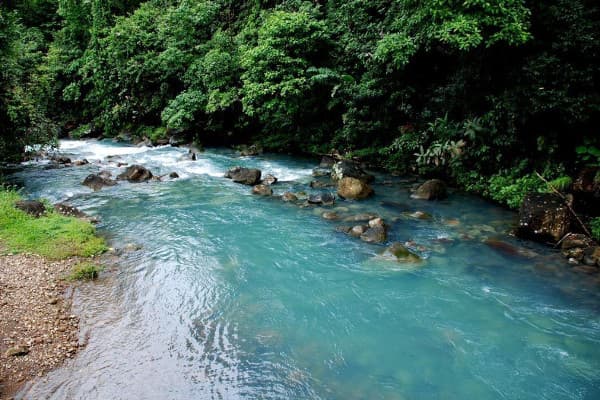
Bijagua is a farming district of about 5,500 people at the foot of Tenorio Volcano, in northern Costa Rica. Most travelers know it as the village they drive through on the way to Río Celeste, the bright blue river 9 km up the road. It deserves more than a drive-through.
We are Jungle Life, a family-run tour operator here in Bijagua. This guide answers what visitors ask us every week: where Bijagua is, how to get here, what the weather is like, what to do besides the waterfall and how long to stay.
Bijagua at a glance
- Where: a district of the canton of Upala, in Alajuela province, northern Costa Rica. It is not in Guanacaste, although you reach it from there.
- Elevation: 430 m (1,410 ft), in the pass between the Tenorio and Miravalles volcanoes.
- Known for: Río Celeste and Tenorio Volcano National Park, whose entrance is 9 km from the village.
- By car: 1 h 5 min from Liberia, 1 h 45 min from La Fortuna, 2 h 40 min from Tamarindo and 3 h 40 min from San José.
- Weather: warm days, cooler nights and rain in every month. February to April is the driest stretch.
- How long to stay: one full day covers the waterfall and a wildlife tour. Two days let you add a night walk and a second activity.
Where is Bijagua?
Bijagua is one of the districts of the canton of Upala, in the province of Alajuela. The village sits at 430 m on National Route 6, the paved road that links Cañas, on the Inter-American Highway, with Upala, near the border with Nicaragua. Cañas is 40 km to the south and Upala 27 km to the north.
People often search for “Bijagua, Guanacaste”, and the mix-up is easy to understand: the village lies on the Guanacaste Volcanic Range, you reach it from Cañas, which is in Guanacaste, and the closest international airport is Liberia. On the map, though, it belongs to Alajuela.
The village fills the pass between two volcanoes, Tenorio to the east and Miravalles to the west. Wind from the Caribbean rises through that gap and drops its rain here, which is why Bijagua is greener and wetter than the Guanacaste lowlands an hour away. See Bijagua on Google Maps.
How to get to Bijagua
By car from Liberia and the Guanacaste beaches. Drive south on Route 1, the Inter-American Highway, and turn left onto Route 6 about 10 km before Cañas. Bijagua is 30 km up that road.
By car from San José. Take Route 27 and then Route 1 north. About 10 km after Cañas, turn right onto Route 6. It is roughly 200 km in total, with tolls on Route 27.
By car from La Fortuna. Take Route 142 to El Tanque, Route 4 to Katira and then the park road, which passes the entrance to Río Celeste before it comes down into Bijagua.
All of those roads are paved, including the 9 km from the village up to the park entrance, so you do not need a 4x4. The park road is narrow and steep in places and slippery when wet: take it slowly.
By bus. Buses between Cañas and Upala stop in Bijagua several times a day, and direct buses from San José to Upala pass through the village after four to five hours on the road. From Liberia, a few buses a day run to Upala through Bijagua. From La Fortuna there is no direct bus: you travel to Upala and take the Cañas bus back. Timetables change, so confirm them at the terminal before you travel. No public bus goes from the village to the park entrance; without a car you need a taxi or a tour.
For the drive to the park itself, with times from each starting point, see our guide on how to get to Río Celeste.
Things to do in Bijagua and near Río Celeste
1. Hike to the Río Celeste waterfall
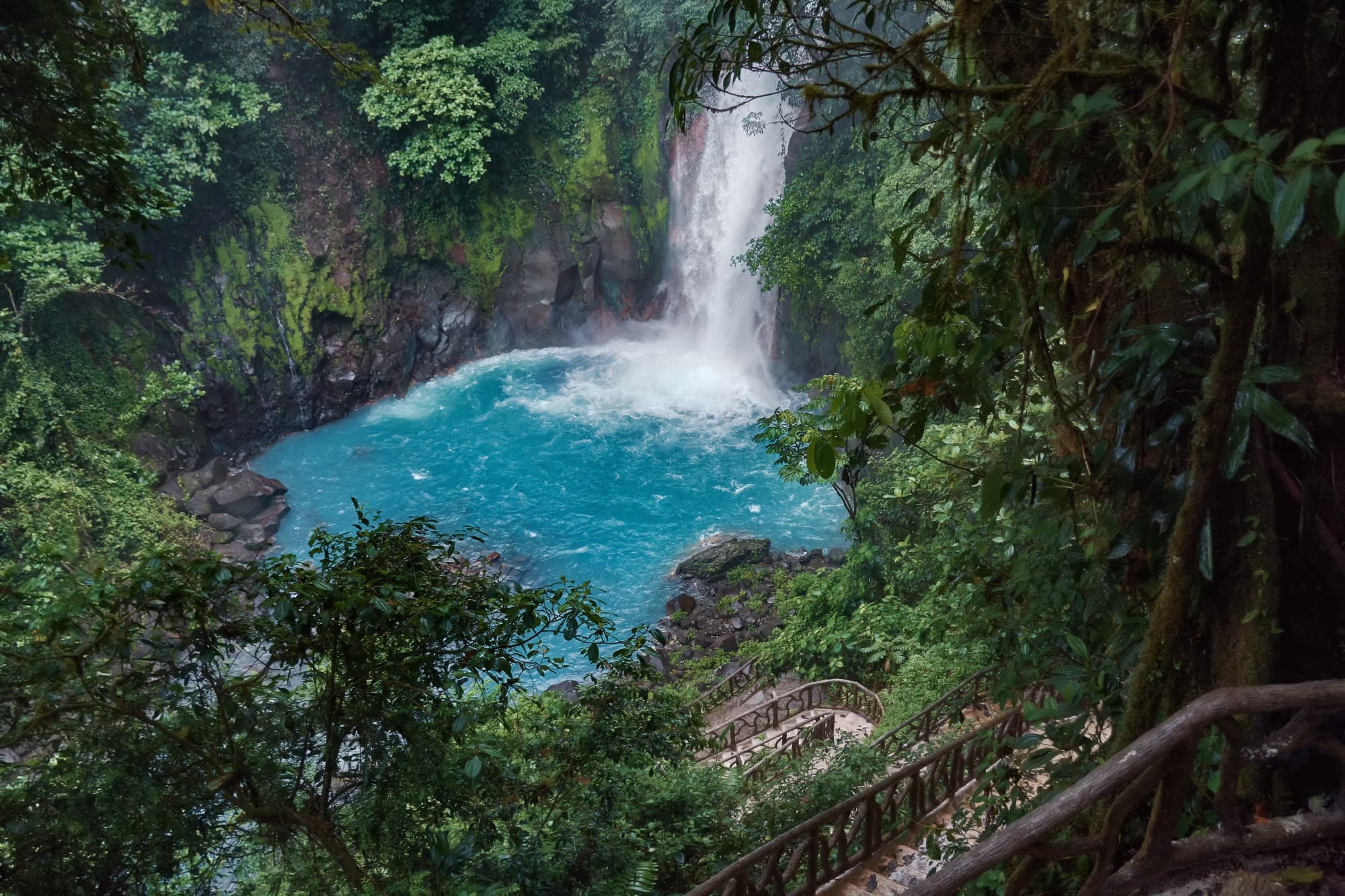
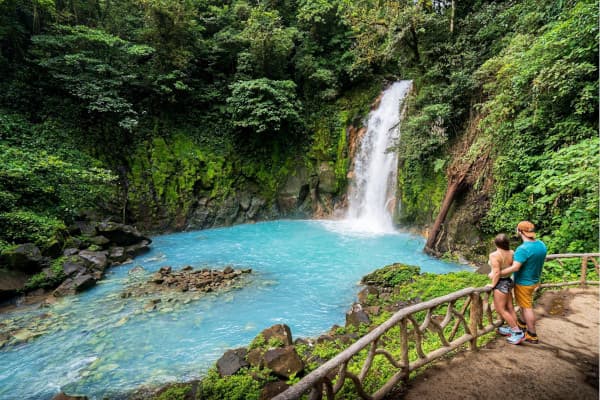
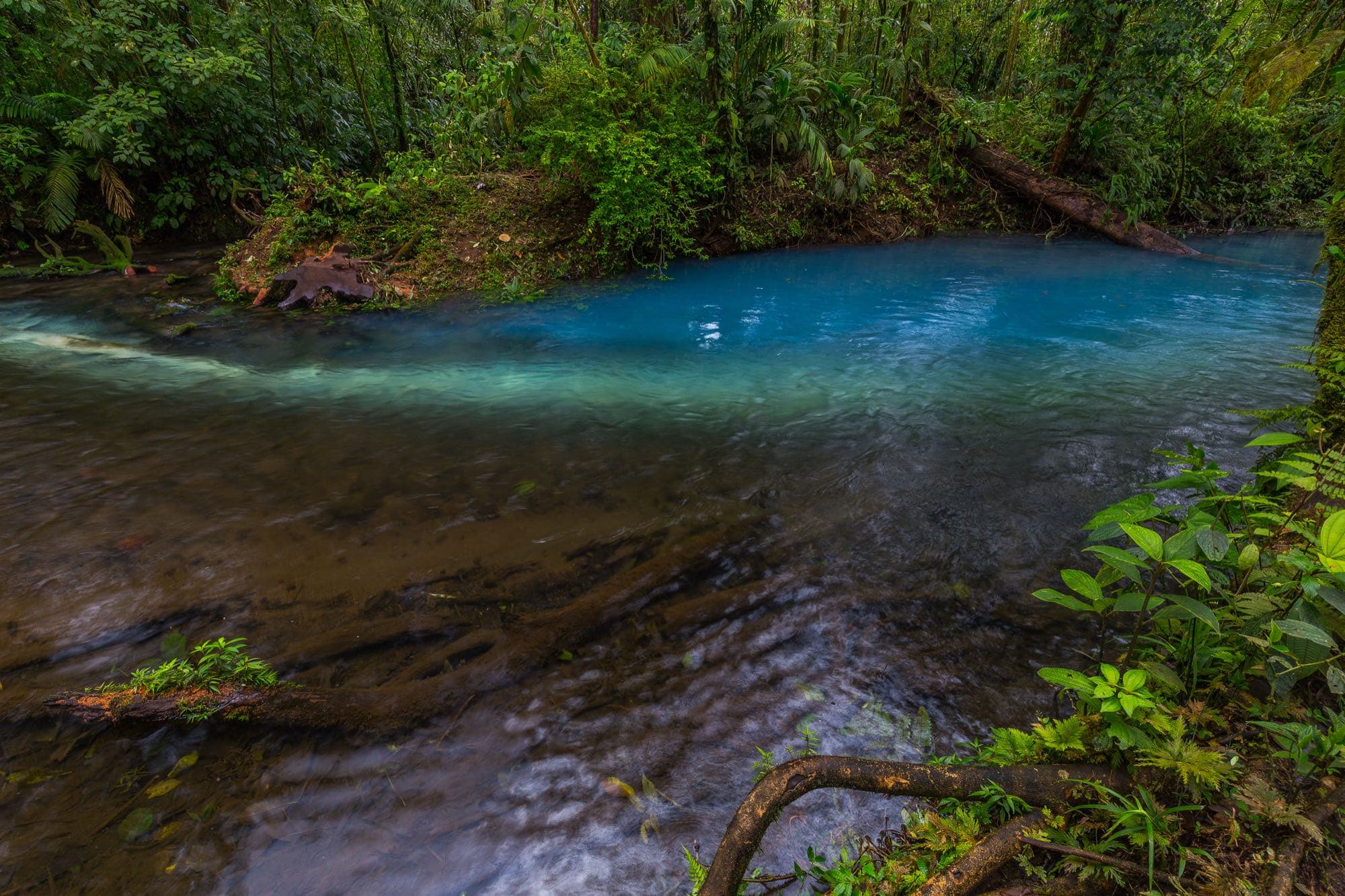
The reason most people come. Tenorio Volcano National Park is 9 km from the village, and its one trail, 6 km round trip, takes you to the waterfall, the Blue Lagoon and the spot where two clear streams meet and the water turns bright blue. The park admits visitors from 8:00 AM to 2:00 PM and tickets are sold only online. Start with our tickets and hours guide and the full Tenorio Volcano National Park guide.
2. See sloths in the wild
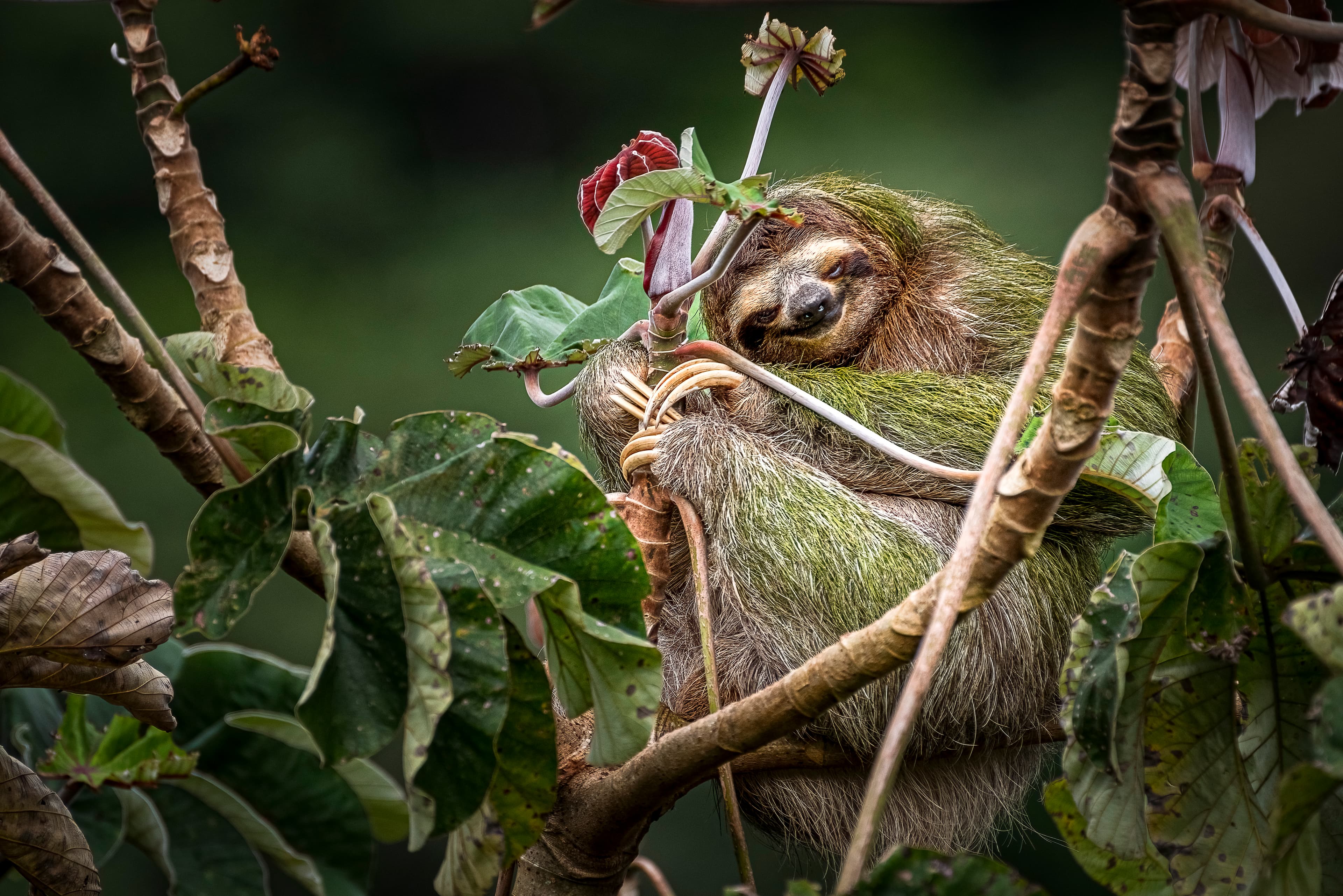
Bijagua lies inside the Tenorio Miravalles Biological Corridor, the band of forest that links the two volcanoes, and both of Costa Rica's sloth species live around the village. Our Sloth Tour is a one-hour guided walk on flat trails in our own reserve, with a spotting scope and binoculars so you see them up close. The butterfly garden is included. There are several departures a day, so it fits before or after the waterfall.
3. Walk the rainforest after dark
Half of the forest only comes out at night. Our Jungle Night Tour and our Frog Tour are two-hour walks that start in the late afternoon, in search of red-eyed tree frogs, poison dart frogs, insects and other nocturnal wildlife. They are the best reason to sleep in the village instead of driving back the same day.
4. Go birdwatching
Toucans, aracaris, trogons, tanagers and hummingbirds are regular sightings on our trails. The Bird Watching Tour is a two-hour walk through primary and secondary forest with a local bilingual guide.
5. Cross the hanging bridges at Heliconias
Heliconias Rainforest Lodge is a community project: in 1991 a group of 23 local farming families saved 73 hectares of primary forest, and their lodge still looks after it. Its 2.5 km trail crosses three hanging bridges, between 75 and 105 m long, up in the canopy. It is about 10 minutes from the center of the village. Check opening hours and the entrance fee with the lodge before you go.
6. Hike to the Bijagua waterfall
The Bijagua River has a waterfall of its own, reached by the private trail of Cataratas Bijagua Lodge, less than 10 minutes from the village. The loop is 5.2 km and takes about two hours. It is steeper and quieter than the national park trail, with a lookout over the village on the way.
7. Swim in the blue water, outside the park
Swimming is forbidden everywhere inside the national park. The place where people do get into the river is a public spot at the bridge 1.2 km past the park entrance, on the road to Katira, known as the Río Celeste Free Pool. It is outside the park boundary and nobody supervises it, so use your judgment, especially after heavy rain.
8. Soak in the Miravalles hot springs
On the far side of Miravalles Volcano, around Fortuna de Bagaces, several hot spring centers use the volcano's heat for thermal pools and steam baths. The nearest are about 45 minutes from Bijagua by car, which makes them a good plan for a second day or a stop on the way back to Guanacaste.
9. Visit a cacao or coffee farm
Bijagua is farm country, and several family farms around the village open their gates for cacao and chocolate tours, coffee tours and visits to working farms. They are small operations that run on reservations, so ask your lodge or write to them a day ahead.
10. See the Peace Tree and Maleku territory
Twenty-five minutes along the park road, in Katira, stands the Árbol de la Paz: a ceiba 48 m tall and more than 300 years old, declared a national peace monument in 1989. Farther east, near San Rafael de Guatuso, the Maleku people, about 1,400 in three communities, receive visitors who want to learn about their culture.
Wildlife: why Bijagua is more than a stopover
The emblem of the area is the tapir. Costa Rica's tourism board calls Bijagua the best place in the country to see one after Corcovado, and every September the village holds the Festival de la Danta, after the animal's local name. Tapirs are shy and nobody can promise you one, but they say a lot about how much forest is still standing here.
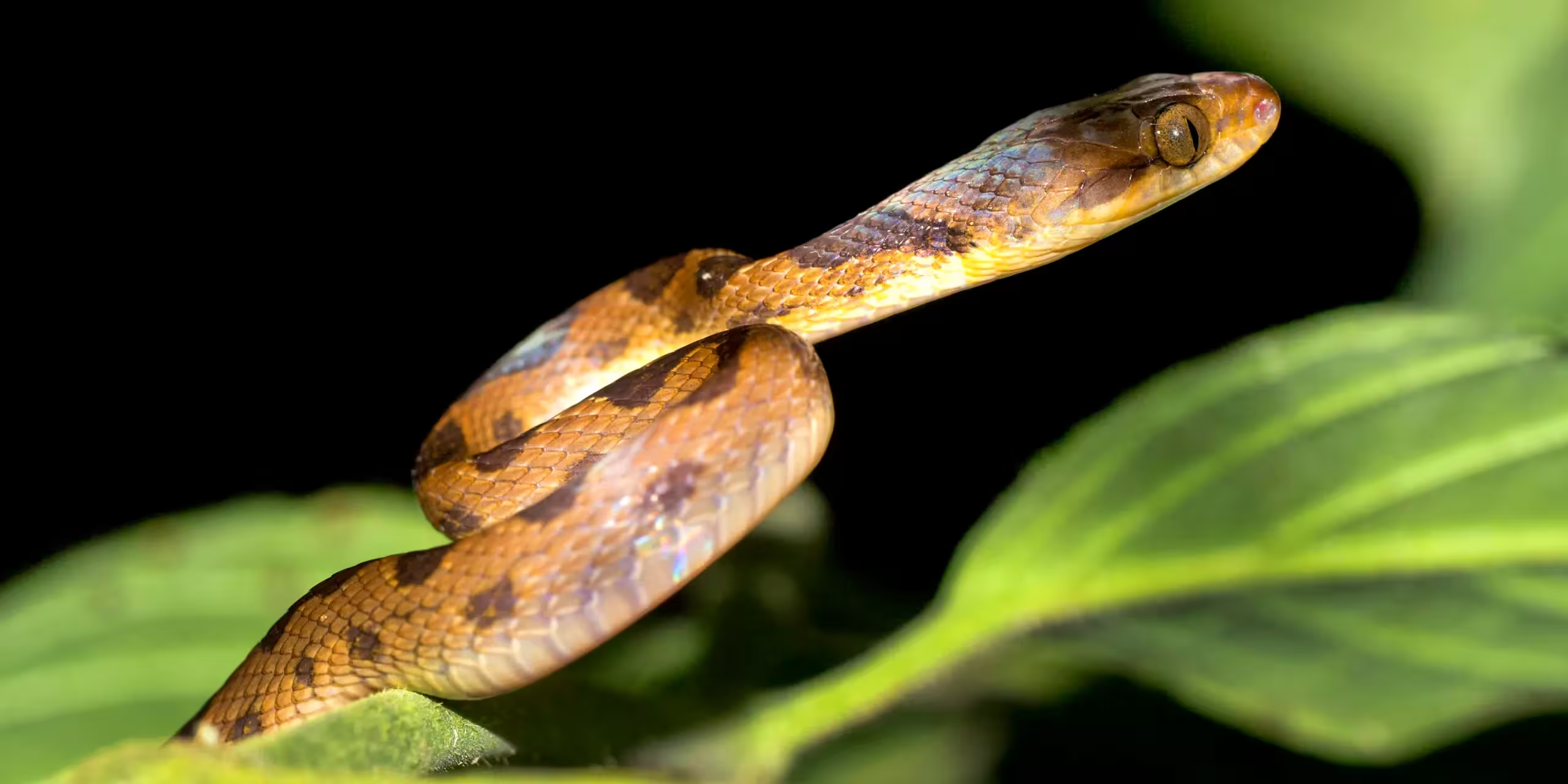
What our guests see most often are sloths, toucans and other birds by day, and frogs and insects after dark. All of our tours run on our own reserve, 1 km up the park road from the village, with local bilingual guides.
Want to see it for yourself?
Join our Sloth Tour in Costa Rica Rainforest
Weather in Bijagua
Bijagua is cooler and much wetter than the beach. The national park next door averages 23°C (73°F) and about 3,500 mm (138 inches) of rain a year, and Bijagua is the rainiest district of its canton. Days are warm, nights are fresh and a shower can arrive in any month.
February, March and April are the driest months, though it still rains. From May to January the rain is more frequent, afternoon showers are common and the forest is at its greenest. In any season the morning is the safer bet for the waterfall, and the river shows its best color after about 24 hours without rain.
Pack closed shoes with grip, a light rain jacket, a sweater for the evening and insect repellent.
Where to stay and eat
Bijagua is small but well set up for visitors: the tourism board counted 25 lodging businesses in the district in 2023, most of them small. You will find rainforest lodges along the park road, cabins and bed and breakfasts on working farms, and simple rooms in the village itself. In high season, from December to April, book ahead.
For food, look for the sodas, the family restaurants that serve casados, fresh fruit drinks and whatever is in season. There are several in the village and across from the park entrance. The dairy farms here supply a local cheese factory, so try the cheese.
Services in the village
- Fuel: a gas station on Route 6, at the north end of the village.
- Cash: Banco Nacional has a branch with an ATM. Carry some cash for parking at the park and for small sodas.
- Groceries: several supermarkets on the main road.
- Health: a public clinic (EBAIS) in the village. The nearest hospital is in Upala, 27 km north.
How many days do you need in Bijagua?
One day works if you start early: the national park at 8:00 AM, lunch near the entrance and our Sloth Tour in the early afternoon. If you are coming from the Guanacaste beaches, a tour that starts by 1:00 PM gets you back on the road in daylight.
Two days is what we recommend. Day one for the waterfall and the sloths, with a night walk at the end. Day two for an early bird walk, the hanging bridges or the Bijagua waterfall, and the hot springs on your way out.
To plan the whole day on one page, see our Río Celeste planning page.
Frequently asked questions
Bijagua is a district of the canton of Upala, in Alajuela province, northern Costa Rica. It sits at 430 m on Route 6, between the Tenorio and Miravalles volcanoes, 40 km north of Cañas and 9 km from the entrance to Tenorio Volcano National Park.
No. Bijagua belongs to Alajuela province. It is often placed in Guanacaste because it lies on the Guanacaste Volcanic Range and is reached from Cañas and Liberia, which are in Guanacaste.
Yes, if you like nature and quiet. It is the closest village to Río Celeste, the forest around it holds sloths, toucans, frogs and tapirs, and it sees far fewer visitors than La Fortuna. Staying one night lets you add a night walk to the waterfall hike.
The entrance to Tenorio Volcano National Park, where the Río Celeste trail starts, is 9 km from the village: 15 to 20 minutes by car on a paved road.
Warm days, cooler nights and rain in every month. The national park next door averages 23°C (73°F) and about 3,500 mm of rain a year. February, March and April are the driest months.
No. Route 6 from Cañas, Route 4 from La Fortuna and the road from the village to the park entrance are all paved.
One full day covers the Río Celeste hike and a wildlife tour. Two days let you add a night walk, birdwatching and a second hike or the hot springs.
Not inside the national park, where entering the river is prohibited. People swim at a public spot by the bridge 1.2 km past the park entrance, outside the park boundary.
Yes. Both the two-toed and the three-toed sloth live in the forest around the village. The easiest way to see them is a guided walk with a spotting scope, like our Sloth Tour.
Yes. Banco Nacional has a branch with an ATM, and there is a gas station on Route 6 at the north end of the village.